
- Namibia
School in the bush
Grade 0-9
Wild Kids Academy
- The Idea
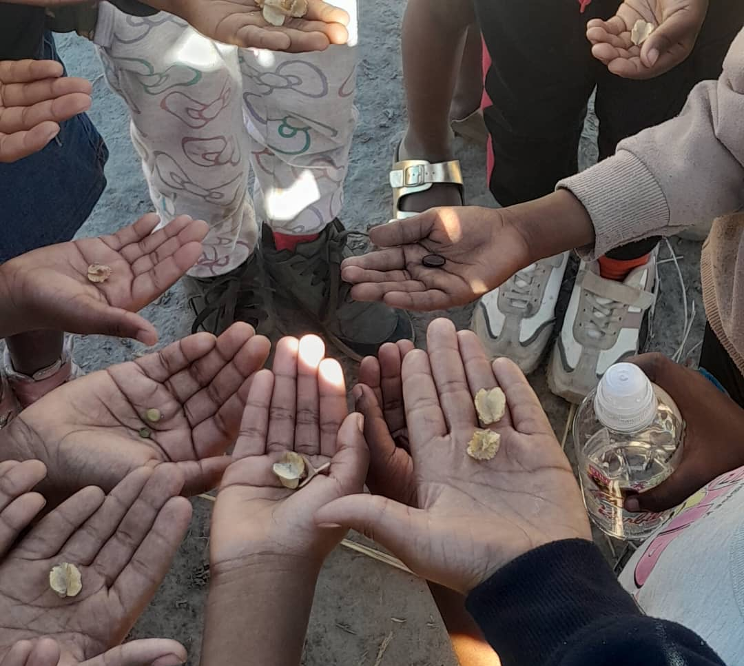
The «School in the Bush» project is an immersive environmental education initiative designed to bridge the gap between classroom learning and real-world conservation. Recognizing that children in wildlife-rich areas like the KAZA are the future custodians of our natural heritage, the project moves the curriculum outdoors. The core idea is to transform the wilderness into a living laboratory where students engage directly with local ecosystems to foster deep environmental empathy and practical conservation skills.
- Implementation
The implementation is built around high-impact research expeditions and multi-day camping trips. Twice a year, we bring all the learners from grade 0 to 9, camping in the bush and expose them to different activities and classes around the selected theme. Grades are combined into groups (0-1; 2-3; 4-5; 6-7; 8-9) to accommodate our logistical limits (not enough camping equipment) and the availability of the hosts. The environmentalist collaborates with the teachers to align the outdoor program with academic needs, and together they deliver a combination of theoretical and hands-on activities to the learners.
- Continuation
The project is designed for long-term scalability and institutional growth: every year a new theme is chosen and new adventures developed around it.
Benefits for the environment
The «School in the Bush» project provides a scalable model for environmental stewardship by integrating conservation directly into the socio-economic fabric of the region. The added value for nature and the environment includes:
- Long-term Biodiversity Protection: by fostering deep environmental empathy from a young age, the project creates a generational shift toward the active protection of local flora and fauna.
- Climate-Conscious Operations: through the rigorous use of digital, paperless administrative tools, the project minimizes physical waste and demonstrates the feasibility of eco-efficient management in a remote context.
- Mitigation of Human-Wildlife Competition: education acts as a preventative tool, providing the community with the knowledge needed to reduce negative interactions with wildlife and share the landscape sustainably.
- Establishment of a Living Laboratory: the project transforms wild spaces into areas of observation and respect, where «leaving no trace» becomes a fundamental practice that students carry back into their communities.
Challenges
The main challenges are related to costs and logistics.
Although we have been fortunate enough to use camping equipment provided by a generous tour operator, we have not been able to make this 100% project fully inclusive, since parents must cover the costs. The fee is relatively inexpensive, and to be honest, most families are willing to pay it. So far, it’s working.
Material
Camping equipment. The rest can change considering the planned activities. Can be pens, pencils, some printed laminated sheets, etc.
Costs
Camping equipment. The rest can change considering the planned activities. Can be pens, pencils, some printed laminated sheets, etc.
That is what makes our project special
Our project deserves to win because it represents a practical, deeply rooted, and highly scalable approach to environmental education that prepares the next generation for active conservation leadership.
- Strategic Feasibility: the project is backed by a professional 2025–2027 Strategic Plan, ensuring that our vision for «School in the Bush» is supported by clear operational goals and a long-term roadmap for success.
- Scalability for the Region: a primary goal of the Wild Kids Academy is to create a replicable model. By developing standardized conservation booklets and documenting our expedition frameworks, we provide a structured methodology that other schools in similar wildlife-rich areas can easily adopt and implement.
- Unique Learning Opportunities: we transform the wilderness into a «living laboratory» where students move beyond textbooks to engage in research-driven expeditions, such as «The Life of the River.» This immersion creates a profound level of environmental empathy that traditional classrooms cannot achieve.
- Tangible Growth and Commitment: our dedication is evidenced by our active pursuit of land acquisition for expanded facilities. We are committed to establishing a permanent, environmentally-conscious footprint that allows for year-round conservation programming.
- Cultivating Future Custodians: by integrating conservation directly into the curriculum, we are bridging the gap between local communities and nature. Our project empowers students with the knowledge and sense of ownership needed to protect their natural heritage for generations to come.